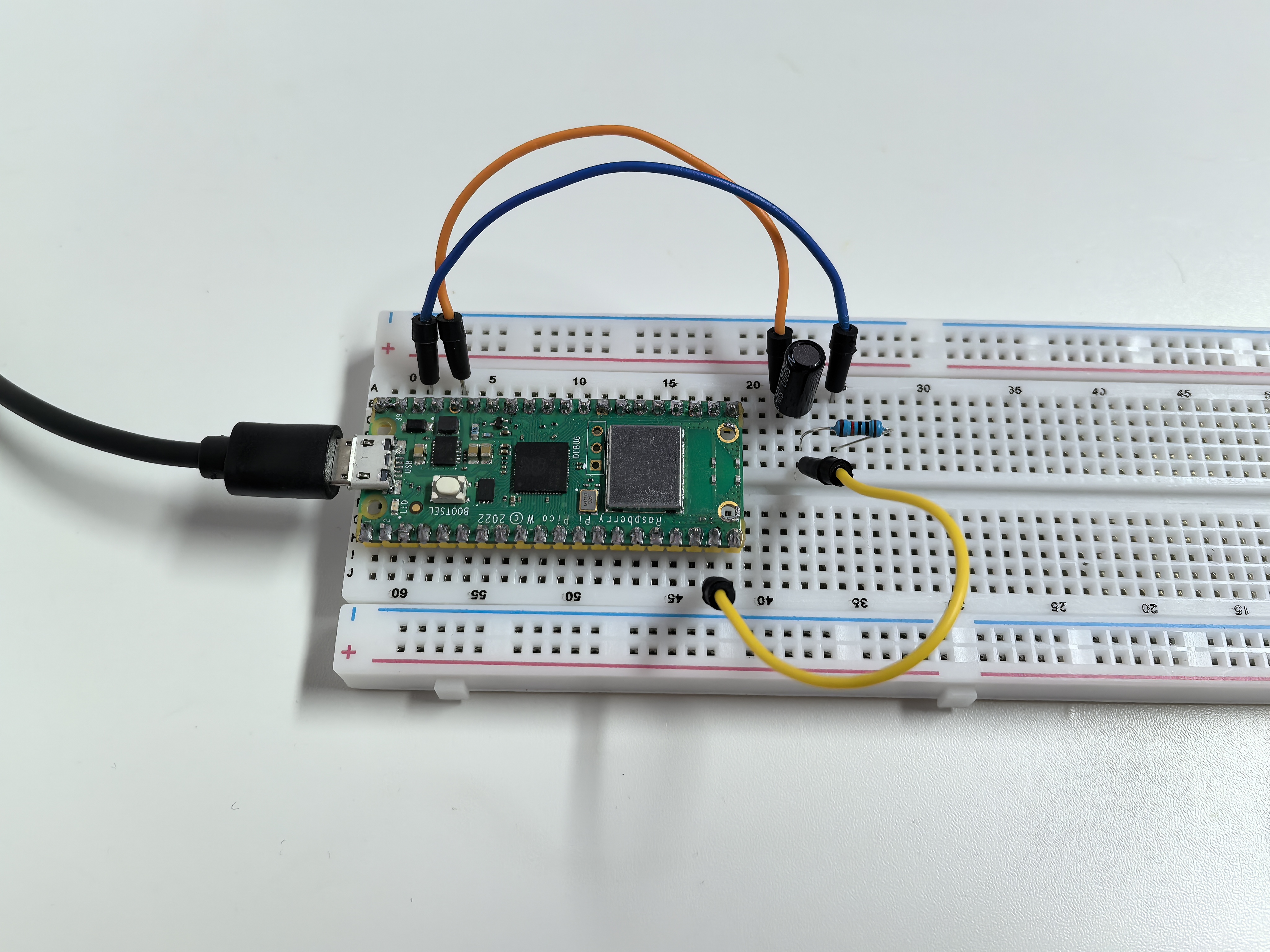
1.6 Tilt Switch
A tilt switch is like a digital “bubble level” - it detects when something is tilted! It contains a small metal ball that rolls around inside. When held upright, the ball connects two metal contacts. When tilted, the ball rolls away and breaks the connection.
This makes it perfect for detecting orientation changes, like in phone screen rotation or gaming controllers.
Component List
Raspberry Pi Pico W x1
MicroUSB cable x1
830 Tie-Points Breadboard x1
Tilt Switch x1
Resistor 10KΩ x1
Jumper Wire Several
Component knowledge
Tilt Switch
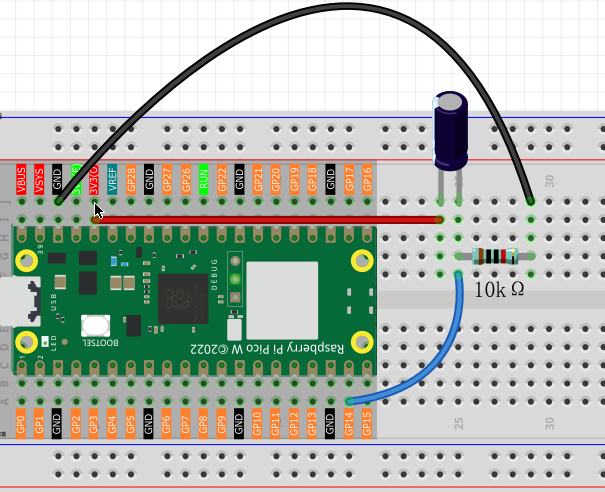
How it works with our circuit: - Upright position: Metal ball connects the pins → GP14 reads HIGH - Tilted position: Metal ball rolls away → GP14 reads LOW
The 10KΩ pull-down resistor ensures GP14 has a stable LOW signal when tilted, preventing floating voltage issues.
Connect
Code
Note
Open the
1.6_tilt_switch.inofile under the path ofUltimate-Starter-Kit-for-Pico-W\Arduino\1.Projector copy this code into Thonny, then click “Run Current Script” or simply press F5 to run it.Or copy this code into Arduino IDE.
Don’t forget to select the board(Raspberry Pi Pico) and the correct port before clicking the Upload button.
After running the code, tilt your breadboard in different directions. The serial monitor will show real-time messages when the sensor detects position changes, displaying “TILTED” or “LEVEL” with timestamps.
The following is the program code:
/*
  Tilt Switch Monitor

  Reads a tilt switch and reports when the orientation changes.
  Shows different messages for tilt and level positions.
*/

// Pin definition - connect tilt switch to this pin
const int tiltPin = 14;     // tilt switch connected to pin 14

// Variables to track switch state
int currentState = 0;       // current reading from tilt switch
int lastState = 0;          // previous reading to detect changes
bool showWelcome = true;    // flag to show welcome message once

void setup() {
  // Set up the tilt switch pin as input
  pinMode(tiltPin, INPUT);

  // Start serial communication
  Serial.begin(115200);

  // Read initial state
  lastState = digitalRead(tiltPin);
}

void loop() {
  // Show welcome message once at start
  if (showWelcome) {
    Serial.println("=== Tilt Switch Monitor ===");
    Serial.println("Current position: " + String(lastState == LOW ? "TILTED" : "LEVEL"));
    Serial.println("Move the sensor to see changes...");
    showWelcome = false;
  }

  // Read current tilt switch state
  currentState = digitalRead(tiltPin);

  // Check if state changed (only act on changes, not continuous reading)
  if (currentState != lastState) {
    // Print timestamp for the change
    Serial.print("[");
    Serial.print(millis());
    Serial.print("ms] ");

    // Check new position and print appropriate message
    if (currentState == LOW) {
      Serial.println(">>> SENSOR TILTED <<<");
      Serial.println("Position changed to: TILTED");
    } else {
      Serial.println("--- Sensor Level ---");
      Serial.println("Position changed to: LEVEL");
    }

    Serial.println(); // blank line for readability

    // Remember this state for next comparison
    lastState = currentState;
  }

  // Small delay for stability
  delay(100);
}
Phenomenon